
A key milestone towards indirect tax reform in the country was achieved on Wednesday when state governments approved the introduction of a nationwide dual Goods and Service Tax (GST) from April 1, 2010.
Coinciding with the 3-day traders stir against the implementation of value added tax, the Mid-term Appraisal of the 10th plan has pointed to "serious design flaws" in the tax even as Planning Commission Deputy Chairman Montek Singh

In a Facebook post on the second anniversary of demonetisation, Jaitley said in first four years of the National Democratic Alliance government, the number of income tax returns filers has gone up to 6.86 crore from 3.8 crore in May 2014.

The Bills pertaining to the introduction of a new law and amendment to the Constitution will not be tabled in the coming Budget session of Parliament. finance minister Pranab Mukherjee and state finance ministers will meet in April to decide a new date for the GST rollout.

On the basis of Budget projections, the Centre needs Rs 7.3 trillion revenue during December-March and its expenditure must be limited to Rs 6.7 trillion.

The empowered committee on GST headed by West Bengal finance minister Asim Dasgupta has agreed to a dual structure of the proposed indirect tax regime, which is likely to be introduced from April 2010. The new tax regime would do away with most of the indirect taxes levied at the Centre like excise and services tax, and VAT and Octroi at the State level.
.jpg)
To get what it thinks are its dues, its brass have directed; construction, realty, renting of property, personnel supply, security & goods transport among those under lens

While it's important to work towards saving your marriage, you must also be willing to accept that the outcome may not be what you hope for, says Dr Ashish Sehgal.

'The prospects for both India and the global economy is that we are headed towards a very difficult time.' 'I see very uncertain at least 8-10 months for both India and the rest of the world.'

"Of the structural reforms, the GST has been the most historic in our country. Its chief architect is not with us today. I pay homage to the visionary leader late Arun Jaitely. GST has been gradually maturing into a tax that has integrated the country economically," she said during her budget speech.
The Bharatiya Janata Party Committee on Kelkar panel recommendations on direct and indirect taxes has finalised its report and will submit it to party president M Venkaiah Naidu

Sputnik V is the third vaccine India has given the go-ahead to after 'Covishield', developed by Oxford University and AstraZeneca and 'Covaxin', the indigenous vaccine manufactured by Bharat Biotech. Covishield is manufactured by the Serum Institute of India.

Preparing legal framework to protect states from revenue loss.

A record GST tax collection, an overhaul of the income tax return filing portal and the landmark move to scrap retrospective taxation have set the stage for the next level of reforms in tax administration that include bringing a framework for cryptocurrencies and rationalising the GST rate structure. With tax reforms such as faceless assessment taking roots, 2021 will go down as the year that pivoted the tax administration in a country aspiring to become the world's favourite investment destination. The task ahead is going to be a tough one as the tax department would grapple with taxing cryptocurrencies, rationalising Goods and Services Tax (GST) rates to shore up revenues and post June 2022, the scenario of how the GST revenue plays out for states without the Centre's support of compensation.

IDS-2 and raids to uncover black money stash keep receipts flowing

The government had budgeted revenue realisation for 2012-13 fiscal at Rs 10.38 lakh crore (Rs 10.38 trillion).

On the lines of the proposed Direct Taxes Code (DTC), the government plans to come out with a Common Tax Code (CTC) for service tax and central excise duty to harmonise the two indirect levies.

The US launched an investigation, focusing on whether the tax in India and other countries discriminated against American companies, were retroactive, and reflected unreasonable tax policy.

Going by the number of changes Mr Jaitley's next Budget is likely to see, he will go down in the history of Budget-making as the finance minister who ushered in the largest number of changes in a single Budget, says A K Bhattacharya.

The CAG audit and other data suggests it could be far from the efficient new alternative that was once conceptualised. A conclusive review remains elusive till the government begins to release more granular and comparable data on the complex backend of GST to a deeper scrutiny, by researchers, auditors and the public.

Introduction of GST would make Indian products competitive in the domestic and international markets.

Goods and Services Tax (GST) collections at Rs 95,480 crore in September touched the highest level so far this fiscal, the finance ministry said on Thursday.

...for others it would be an incentive to participate more robustly in equities and other tax instruments.
For supply rules, the location decides where goods or services will be taxed.

The indirect tax reform Goods and Services Tax is stuck in the Rajya Sabha.
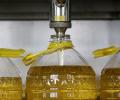
The government has reduced the tariff value for import of edible oil, including palm oil, by up to $112 per tonne, a move which experts said can lead to lower domestic prices. The Central Board of Indirect Taxes and Customs (CBIC), through a notification, has cut the tariff import value of crude palm oil by $86 per tonne, and of RBD and crude palmolein by $112 per tonne each. It also reduced the base import price of crude soyabean oil by $37 per tonne. The changes in tariff value of edible oil are effective from Thursday (June 17).

FM proposed rationalisation of various tax exemptions.
Businesses with monthly turnover of over Rs 50 lakh will have to mandatorily pay at least 1 per cent of their GST liability in cash, the finance ministry said as it moved to curb evasion by fake invoicing. The Central Board of Indirect Taxes and Customs (CBIC) has introduced Rule 86B in Goods and Services Tax (GST) rules which restricts use of input tax credit (ITC) for discharging GST liability to 99 per cent. "... The registered person shall not use the amount available in electronic credit ledger to discharge his liability towards output tax in excess of 99 per cent of tax liability, in cases where the value of taxable supply ... in a month exceeds Rs 50 lakh," the CBIC said.

Inching towards rolling out of GST, the GST Council on Saturday approved a law to compensate states for any loss of revenue from the implementation of the new national sales tax but deferred approval for enabling laws to next meeting.

The empowered committee of state finance ministers has approved the position paper of the Centre on the information technology network for the proposed indirect tax regime.
Public Sector Enterprises contributed over Rs 95,000 crore (Rs 950 billion) to the government exchequer during the financial year 2004-05

"Had corona (COVID-19) not been there, the prime minister would have dedicated NATGRID to the country. I am hopeful that the prime minister will dedicate NATGRID to the country in some time," Union home minister Amit Shah said during the 51st Foundation Day event of the Bureau of Police Research and Development (BPRD) here on September 4.
Kelkar plan may see power tariff rise 30% Ministry of power has said that tax liability of the power sector would increase by up to 30 per cent if the Kelkar report on direct and indirect taxes was implemented.

Addressing the Lok Sabha on Wednesday, Finance Minister Pranab Mukherjee called for the inclusion of petroleum products in proposed goods and services tax so that sharp domestic price movements can be checked.

'Given the worries about sluggish growth, rising interest rates and likely volatility, it's quite logical to infer that the SIP route could be the preferred way of investing.'
Raghuram Rajan said the passage of the GST Bill augurs well for the growing political consensus for economic reforms.
 © 2026 Rediff.com - Advertise with us - Disclaimer - Privacy Policy - Sitemap - Feedback - About us - Terms of use - Grievances